
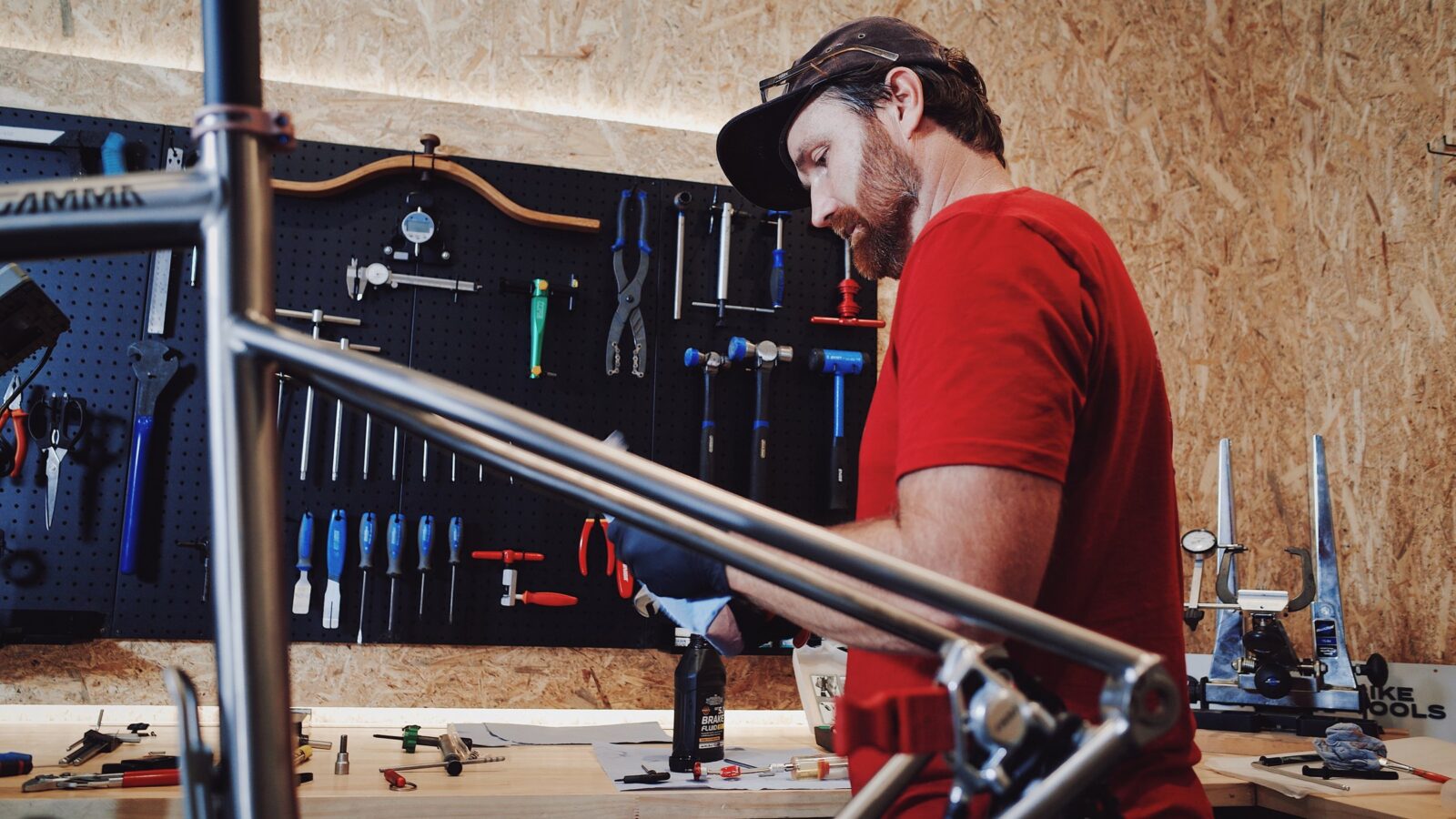
Riders often say “custom bike frame” when they mean several different things. One rider wants a frame built around unusual body proportions. Another wants a normal frame size with shorter cranks, a different bar width, a different stem, and tires that suit local roads. Those are different problems, and they do not need the same answer.
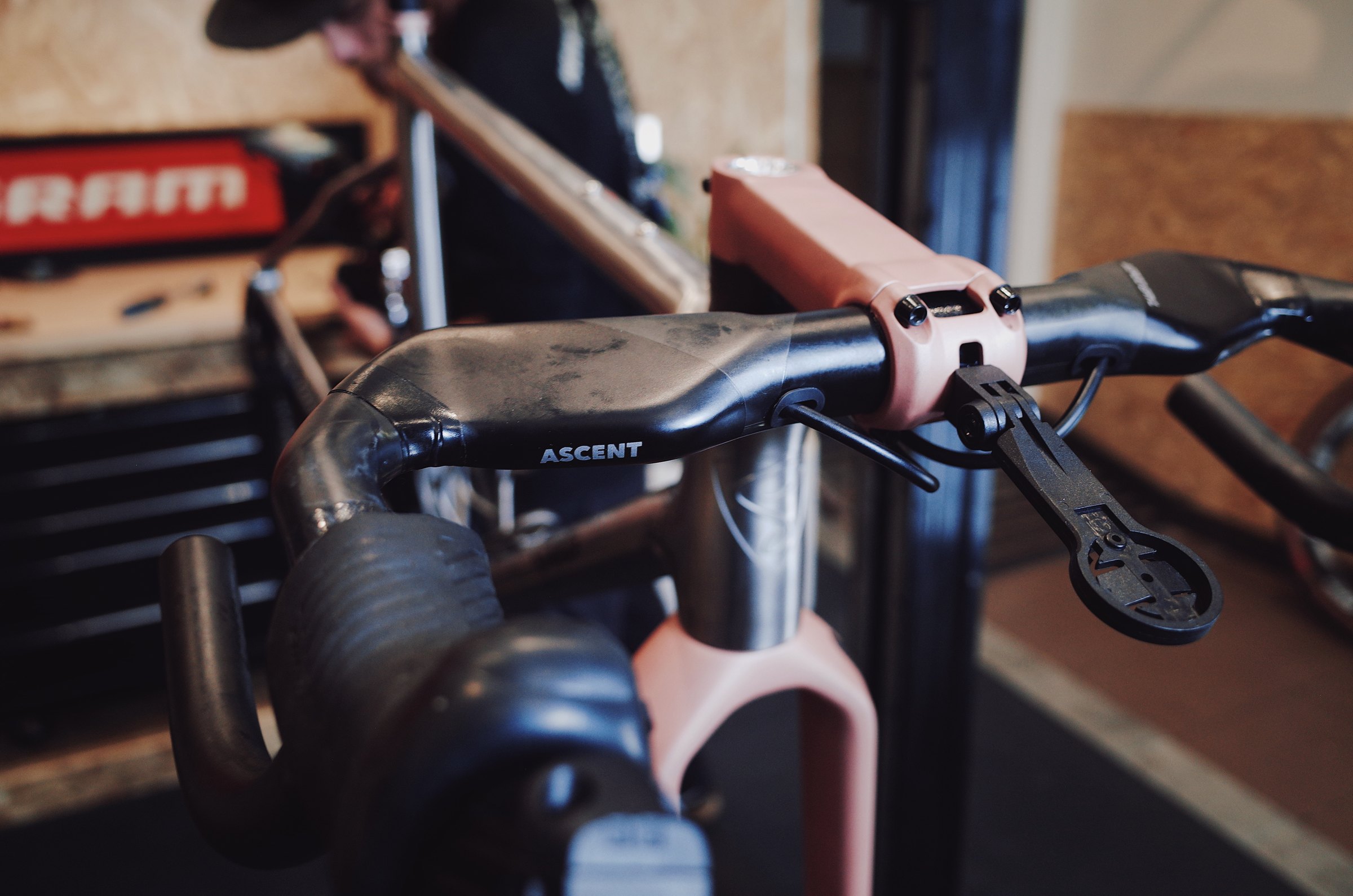
Custom bike frame vs configured fit: the main difference
A custom frame builder changes the frame dimensions for one rider. That can make sense when a rider sits outside normal size ranges, has an injury history, or needs a position that stock geometry cannot support.
A configured fit uses a production frame size as the platform. The fit comes from size choice and the parts around the frame: stem length, spacer height, handlebar shape, crank length, saddle choice, gearing, tires, and wheel setup. The frame stays within its designed geometry, but the final bike still feels specific to the rider.
| Approach | What changes | Best for |
|---|---|---|
| Custom frame | Frame dimensions and geometry | Fit cases that standard geometry cannot solve |
| Configured fit | Frame size, cockpit, gearing, tires, finish, and build choices | Riders who fit within a size range but need a bike set up for their riding |
| Off-the-shelf build | Little beyond saddle height and basic setup | Riders who want a simple purchase and accept the stock specification |
When a custom bike frame makes sense
A custom frame earns its place when the frame itself blocks the position you need. That may mean unusual stack and reach needs, a specific handling target, or a fit history that keeps pushing you away from available sizes. It can also suit riders who know exactly what they want from years of fit data and riding feedback.
The tradeoff is commitment. A one-off frame asks you to make more decisions before you ride it. That can work well with the right builder and a clear brief. It also adds cost and complexity, which is wasted if the real problem is setup.
When configured bike fit is the better answer
A configured fit works when the frame size gets you close and the final bike needs to match your riding. Gravel and all-road bikes benefit from this approach because small choices change the experience: tire volume, bar width, crank length, gearing, and wheel choice all affect comfort and control. Our guides to tire sizes and carbon gravel wheels cover the tire and wheel side.
Simpatico uses size-based geometry. We help riders choose the right platform, then configure the build around the terrain, position, and ride feel they want. That means a rider can choose a Simpatico Gamma Race gravel bike, a Simpatico Gamma X all-road and gravel bike, or a Simpatico N1 all-road bike without presenting each bike as one-off geometry.
Fit choices that matter more than the word custom
Start with stack and reach. Those numbers tell you more about fit than the label on the size sticker. From there, look at the whole system: bar height, stem length, saddle position, crank length, hood shape, tire pressure, and how much control you need when the surface changes.
If your riding mixes fast road, rough shoulders, gravel, and long days, the question is rarely “custom or not?” The better question is which frame gives you the right handling range, then which parts make that frame feel settled under you.
Which should you choose?
Choose a custom frame when standard geometry keeps forcing compromises you cannot solve with normal setup changes. Choose configured fit when you can start from a suitable frame size and make the bike work through the build. Most riders should test that second path first, because it keeps the bike easier to service, easier to compare, and easier to adjust as riding changes.
If you are comparing fit options now, start with the Simpatico size chart and our gravel bike sizing guide, then use a workshop visit or fit conversation to decide which frame and build choices fit the way you ride.