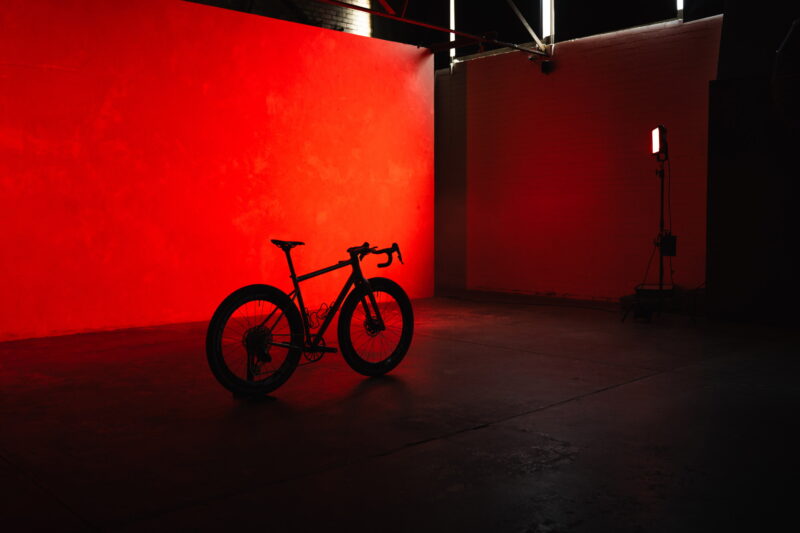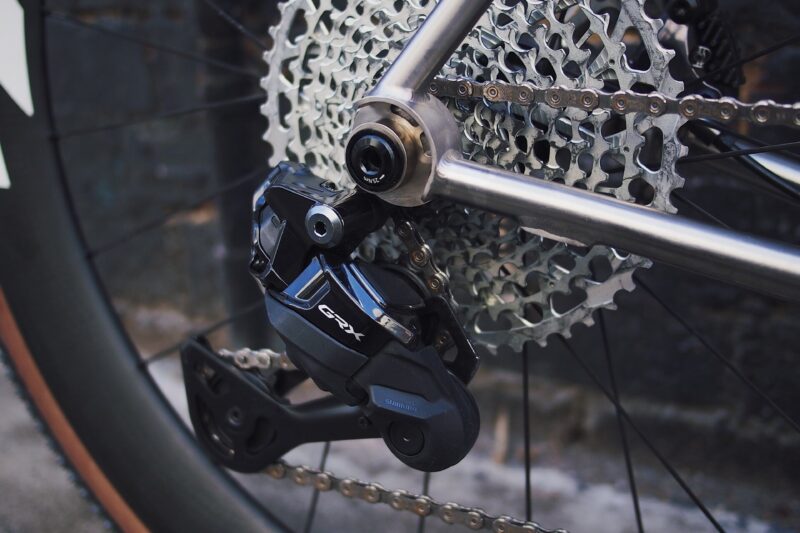
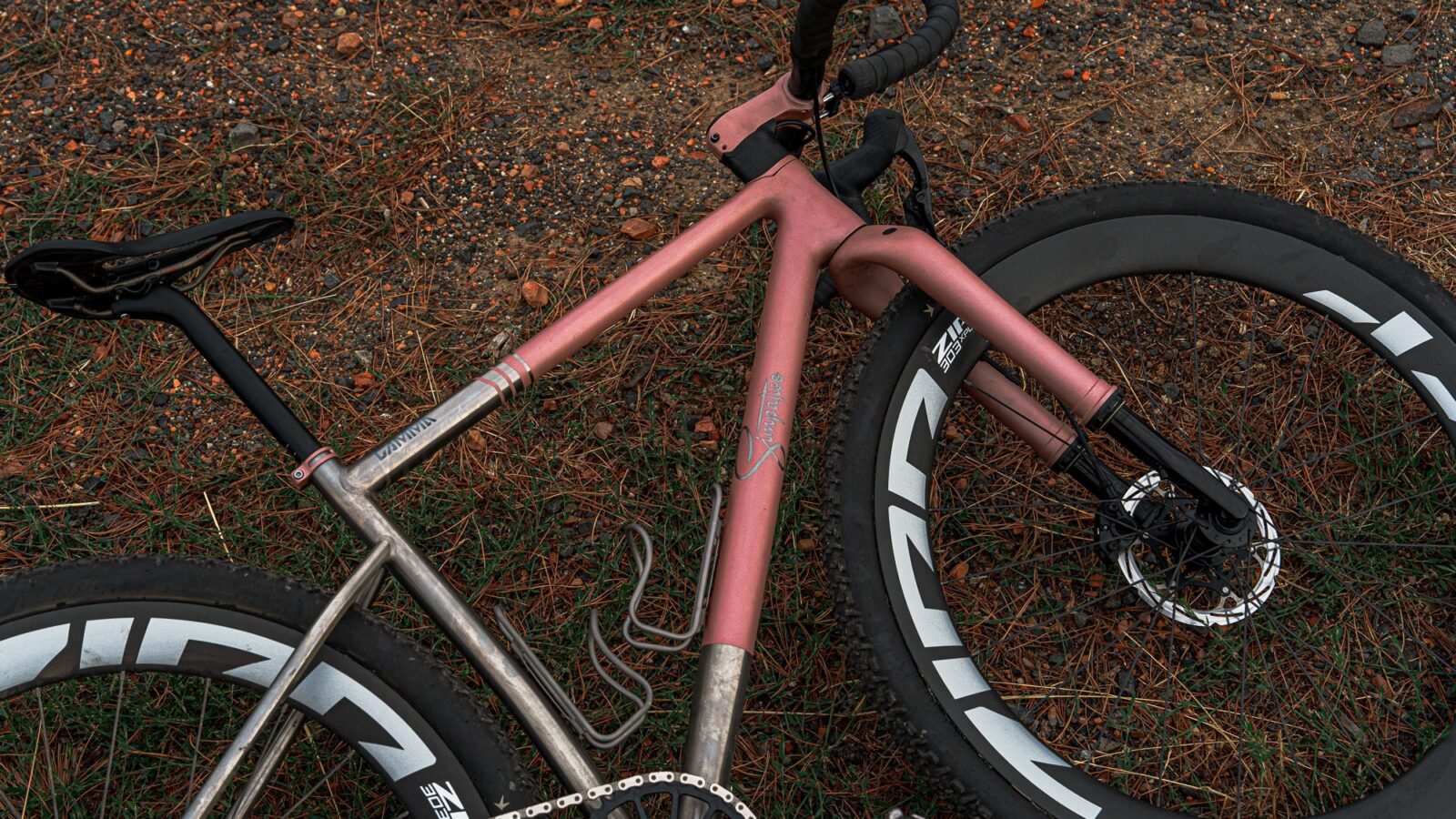
Carbon is usually lighter and can be shaped to put stiffness exactly where the designer wants it. Titanium copes better with knocks and scratches, needs no paint, and tends to stay in service for a very long time. On comfort, the two are closer than their reputations suggest. Here is how they compare on the things that matter for a gravel bike.
Weight: titanium vs carbon gravel frames
A carbon gravel frame is normally lighter than a titanium frame built for the same job. The gap matters most if you race on hilly courses or carry the bike a lot. Once you add a rider, water, tools and bags, the frame is a small share of the total. Wheels and tires often change the weight of a complete gravel bike as much as the frame material does.
If you want carbon for speed, put it in the wheels. On a gravel bike, the wheels and tires affect drag more than the frame’s tube shapes do, and a deep carbon rim helps most at speed. Our Gamma Race and Gamma X come on Nvisage G60 carbon wheels as standard. Our guide to aero gravel setups explains why the rim has to match the tire.
Ride comfort: what testing shows
Titanium has a reputation for a lively, forgiving ride, and many riders say they can feel it. Measured data is less dramatic. In a controlled test, CyclingAbout fitted a titanium and a carbon gravel bike with the same wheels, tires, pressures and contact points, then measured vibration on the same terrain. The two frames recorded almost the same numbers. Fitting a suspension stem and seatpost changed the results far more than the frame material did, and the tester still preferred the feel of the titanium bike.
For comfort, get the tires, tire pressure, fork and contact points right first. Our tire clearance guide covers the biggest of those, tire volume. The frame material changes how the bike feels more than how much it shakes you.
Durability and crash damage
Carbon is very strong for its weight, but a sharp impact from a rock, a crash or an over-tightened clamp can damage the fibers, and the damage isn’t always visible. After a hard knock, a carbon frame should be inspected before you ride it hard again. Specialist repairers can fix many carbon frames.
Titanium is more tolerant of the everyday knocks a gravel bike takes. Stone chips and scuffs mark the surface without weakening the frame, and bare titanium doesn’t corrode, so there is no paint to protect. Titanium can still be damaged in a big crash, and a qualified titanium welder can repair many frames.
Finish: bare titanium vs painted carbon
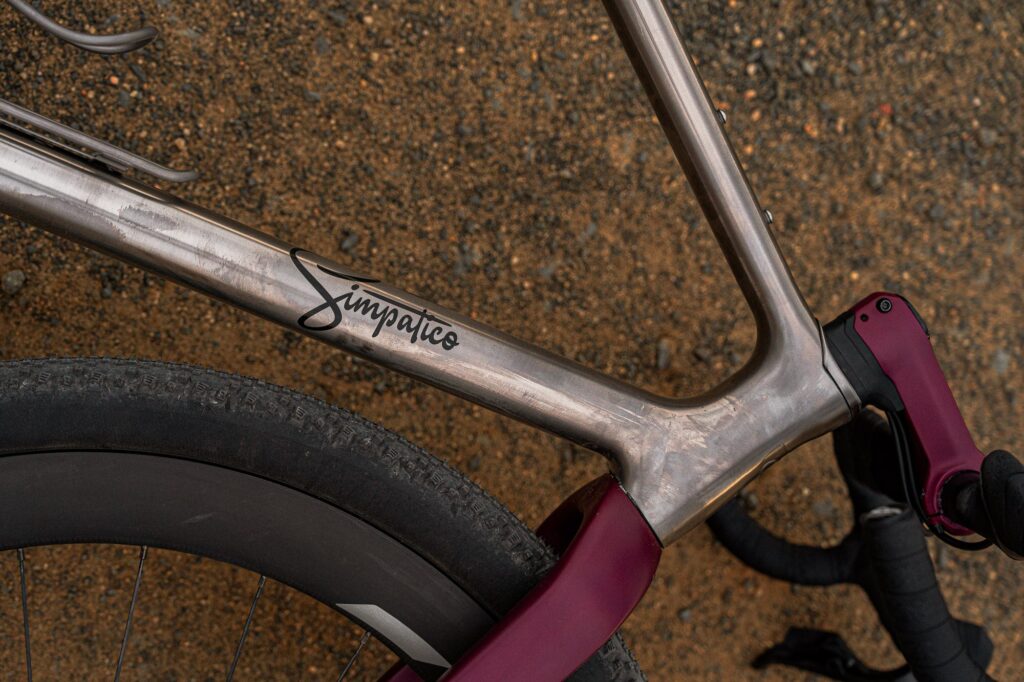
A carbon frame needs paint or a clear coat to protect the resin from sunlight. Titanium can be left bare. A brushed titanium finish hides light scratches and needs only washing, which is one reason many owners never paint it. If you want color, a thin ceramic coating such as Cerakote adds it without the bulk of conventional paint.
Stiffness: carbon layup vs titanium tubing
Carbon lets a designer change stiffness in different parts of the frame by changing the layup. Titanium frames are tuned through tube diameter, wall thickness and shaped junctions. Both materials can make a gravel bike that climbs well and steers precisely. Geometry and tire choice shape handling far more than the material does, so compare those before deciding on material.
Cost and long-term ownership
Titanium frames sit at the upper end of the market. A titanium gravel bike usually costs more than a mid-range carbon one and overlaps with high-end carbon. The case for titanium is how long it lasts. A bare titanium frame doesn’t need refinishing, shrugs off surface damage and can stay in use through several groupsets.
That longevity only pays off if the frame keeps taking current parts. Look for a threaded bottom bracket, a UDH derailleur hanger and a standard round seatpost. Our guide to choosing a titanium gravel bike lists the standards worth checking.
Titanium or carbon: which gravel bike suits you?
| If this matters most to you | Lean toward |
|---|---|
| Lowest possible weight for racing on hilly courses | Carbon |
| A frame that tolerates rocks, scuffs and travel without fuss | Titanium |
| No paint to maintain, and a frame you plan to keep for a decade or more | Titanium |
| The lowest price for a given weight | Carbon |
| Maximum comfort | Either. Choose on tires, fork and contact points |
Our titanium gravel bikes
We build in titanium because our customers keep their bikes a long time and ride them on rough roads. All three of our frames use Grade 9 Ti-3Al-2.5V tubing and carry a 10-year warranty against manufacturing defects. The Gamma Race is our fast gravel bike, with room for a 60 mm front tire and 55 mm rear. The Gamma X is built around a Cane Creek Invert suspension fork for rougher riding. The N1 is our all-road gravel bike for riders who split their time between pavement and gravel.