Gravel racing has become fast enough for aerodynamics to matter. At race pace on open gravel roads, most of your effort goes into pushing air out of the way. The good news is that you do not need an aero frame to go faster. Most of the gain comes from the parts the air hits first: your position, your tires and your wheels.
Where aero drag comes from on a gravel bike
The rider makes up most of the drag, so position comes first. A lower, narrower position that you can hold for hours saves more than any frame shape. After the rider, the wheels and tires are among the easiest things to change that affect drag, and the front wheel meets clean air before anything else on the bike.
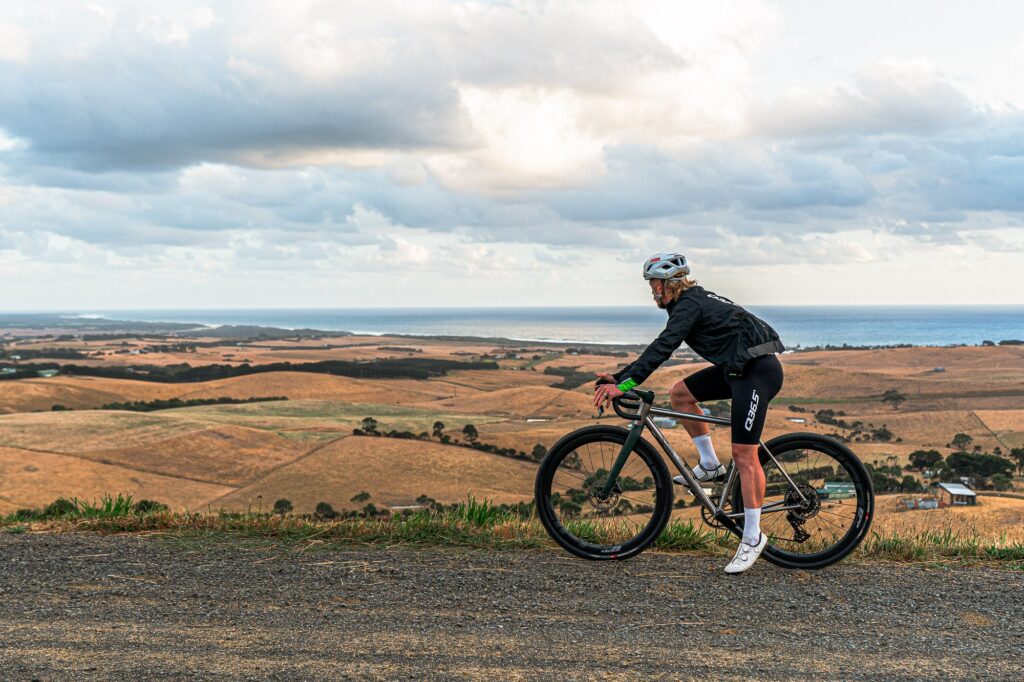
Frame tube shapes matter less on a gravel bike than on a road race bike. Bags, bottles, wide tires and a more upright position all disturb the airflow around the frame. That is why a round-tube titanium frame with the right wheels and tires can be a genuinely fast gravel setup. Our comparison of titanium vs carbon gravel bikes covers the other differences between the two materials.
Why the rim has to match the tire
Air flows over the tire first and then over the rim. When the tire is much wider than the rim, the air separates as it leaves the widest part of the tire and has little chance of reattaching to the rim. The rim’s depth then adds weight without doing much for drag.
The smaller the step between the tire and the rim, the better the chance that the air follows the tire onto the rim and stays attached. That is when a deep rim starts to pay off. A gravel rim does not have to be wider than the tire to help, but closing the gap matters, and it is the main reason gravel rims have become so much wider.
Wheel makers now design around this. When ENVE launched its G SES gravel wheels, it described the match between wide rims and wide tires as a large aerodynamic opportunity, and its widest model uses a 35 mm internal rim for tires of 44 mm and up, according to BikeRadar’s report on the launch.
Choosing rim depth, rim width and tire size
- Choose the tire first, for the terrain you race or ride.
- Choose a rim wide enough to keep the step between tire and rim small.
- Then choose the depth. Deeper rims help most at higher speeds and on open roads.
A 45 to 50 mm tire on a wide, deep rim is a fast combination for dry, hard-packed gravel. On rougher or looser surfaces, a slightly wider tire at lower pressure often saves more time than any aero gain, because it keeps you moving over the bumps instead of bouncing off them.
Fast gravel tires: tread and casing
Tread and casing matter as well as width. A tire with low, closely spaced knobs and a supple casing rolls faster and disturbs less air than an aggressive mud tread. Save the bigger knobs for mud and loose climbs.
Gamma Race with Nvisage G60 wheels
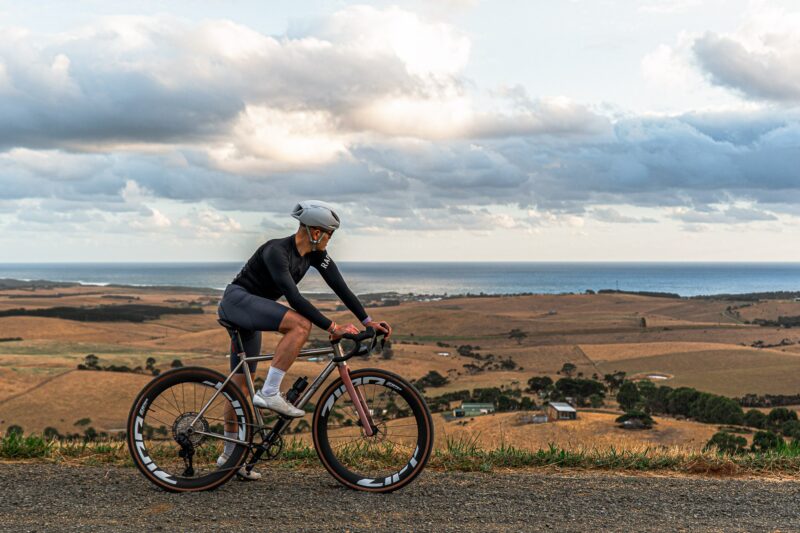
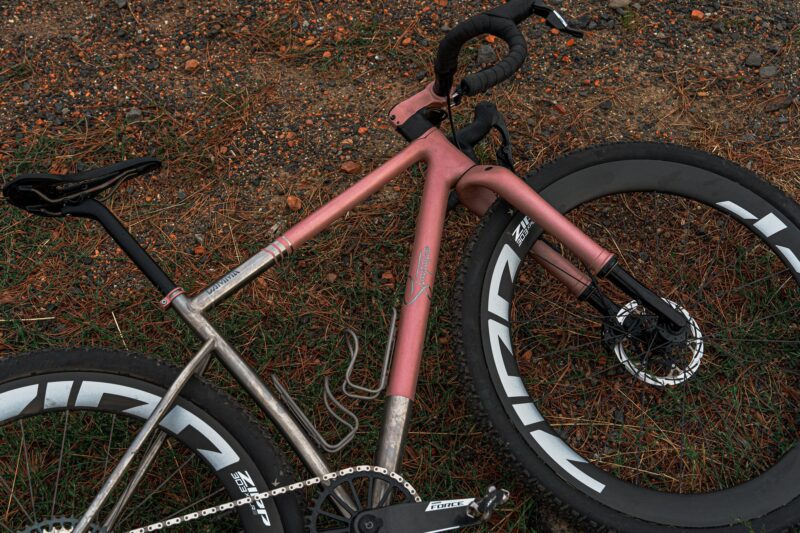
Our Gamma Race is a round-tube titanium frame with gravel race geometry and room for big tires. Paired with our Nvisage G60 wheels, which are 60 mm deep with a 38 mm internal and 44 mm external width, it makes a fast, comfortable package for racing and long days on gravel roads.
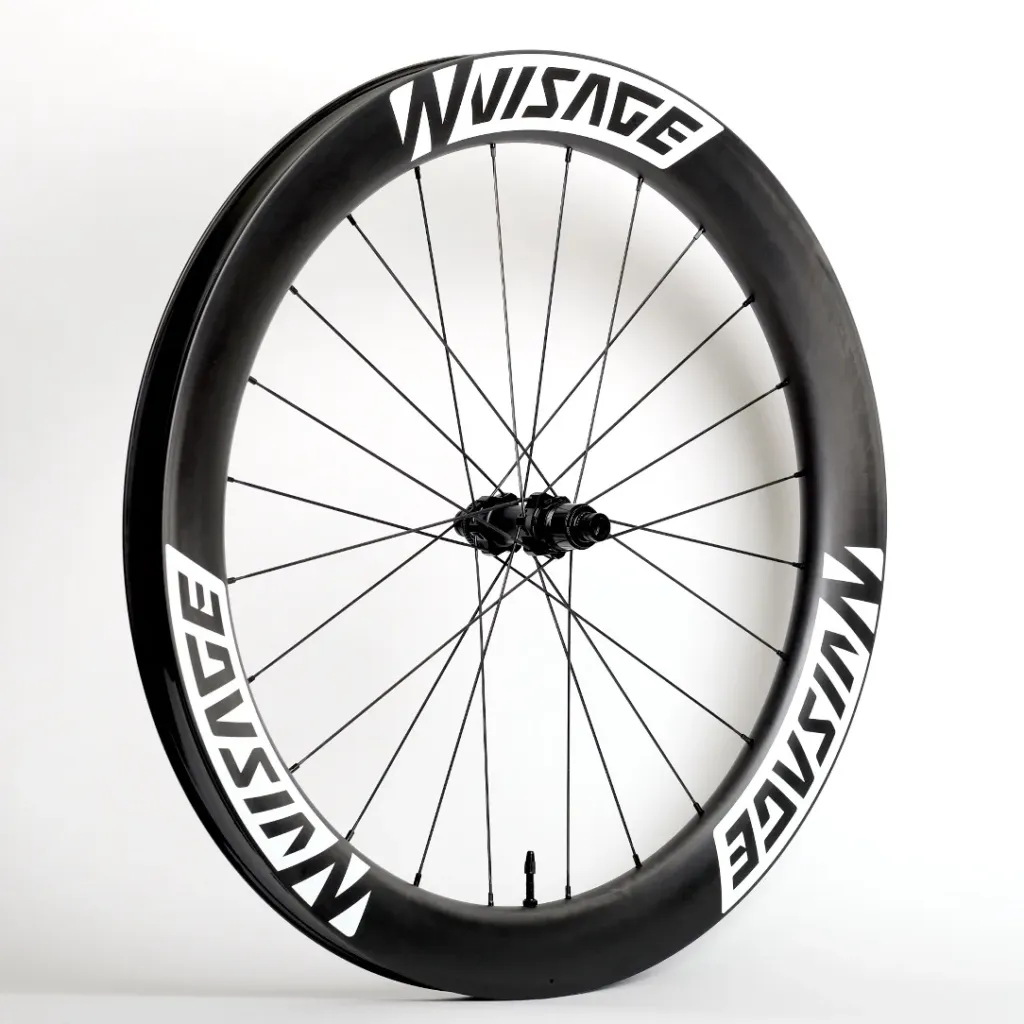
The G60 is designed for tires from 45 to 57 mm. On the Gamma Race and Gamma X, that means anything from a fast 45 mm race tire up to a 2.2 in tire in dry conditions. In mud, run a slightly narrower rear tire to leave more room. How much depends on your local soil and weather.
The same logic works on the road. Our N1 on AR45 or AR65 wheels with 35 to 40 mm road tires is the road version of this setup. Our comparison of gravel bikes vs road bikes covers it in more detail.
For more on choosing wheels, read our guide to carbon gravel wheels. For tire widths and pressures, see the tire size guide and tire pressure guide.