Bike tire sizes are written in several systems at once, and the same tire can carry three different labels. This guide explains how to read them, which width suits which kind of riding, and how to match a tire to your rim and frame.
How to read bike tire sizes
Most road and gravel tires use the 700c wheel size. The same rim diameter is called 29 in on a mountain bike. Both have a 622 mm bead seat diameter, so a 700c gravel wheel and a 29 in mountain bike wheel take the same tires.
| Label | Example | What it means |
|---|---|---|
| Metric | 700x40c | 700c wheel, about 40 mm wide |
| ETRTO / ISO | 40-622 | 40 mm wide, 622 mm bead seat diameter |
| Inch | 29 x 2.2 | 29 in wheel, about 2.2 in (56 mm) wide |
The ETRTO number is the most precise, because the bead seat diameter tells you exactly which rim the tire fits. To convert inch widths, multiply by 25.4: a 2.1 in tire is about 53 mm and a 2.2 in tire is about 56 mm.
Why measured width differs from the label
The width on the sidewall is measured on a particular rim. On a wider rim the same tire spreads out and measures wider. It can also grow a little as the casing stretches over the first rides. When you are close to your frame’s limit, check the tire on the rim you will actually use.
Tire width by riding type
| Riding | Typical width | Nvisage wheel |
|---|---|---|
| Road racing on smooth tarmac | 28 to 32 mm | AR45, from 32 mm |
| Endurance road and rough country roads (more on wider road tires) | 32 to 40 mm | AR45, or AR65 from 35 mm |
| Mixed road and gravel | 40 to 45 mm | AR45 |
| Fast gravel and gravel racing (more on fast gravel setups) | 45 to 50 mm | G60 or AR65 |
| Rough gravel, bikepacking and technical terrain | 50 mm to 2.2 in | G60 |
These are starting points. Tread, casing and pressure matter as much as width. Our tire pressure guide explains how pressure and width work together.
Matching tire width to rim width
Every rim works with a range of tire widths, and tire makers publish the rim widths each tire is approved for. A tire that is too wide for the rim feels vague and folds in corners. A tire that is too narrow for the rim can be hard to seat and more exposed to rim damage. Check both the rim maker’s tire range and the tire maker’s rim range.
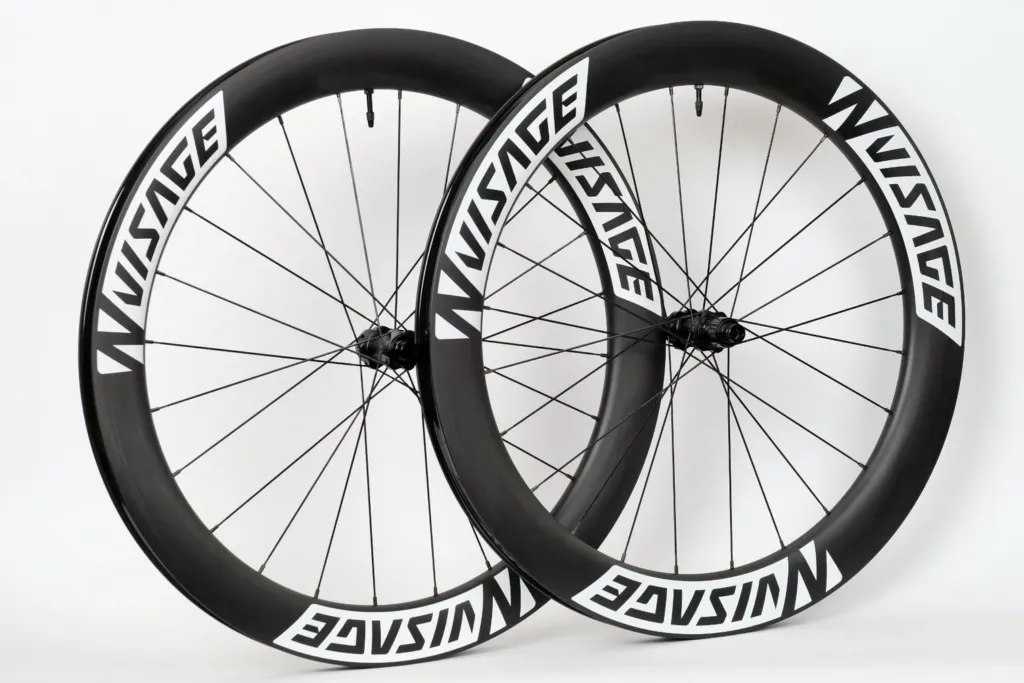
Our Nvisage wheels publish their ranges. The AR45 (29 mm internal) suits 32 to 40 mm road tires and 40 to 52 mm gravel tires. The AR65 (32 mm internal) suits 35 to 40 mm road and 42 to 57 mm gravel tires. The G60 (38 mm internal, hookless) suits 45 to 57 mm gravel tires. On hookless rims, use only tires approved for hookless use.
Checking frame clearance
The last check is frame clearance. Leave room around the tire for mud, stones and a little wheel flex. Our tire clearance guide explains how much.
| Our bikes | Tire range |
|---|---|
| N1 | Road tires from 28 mm, including 35 to 40 mm, and gravel tires up to 45 mm with 2x or 48 mm with 1x |
| Gamma Race | 45 mm up to 2.2 in in dry conditions |
| Gamma X | Up to 50 mm front with the suspension fork, up to 2.2 in rear in dry conditions |
In mud, a slightly narrower rear tire leaves more room, and how much you need depends on your local soil and weather. For choosing wheels to go with your tires, read our guide to carbon gravel wheels.