Carbon gravel wheels have changed more in the last few years than almost any other part of a gravel bike. Rims are wider and deeper, and they are designed around the 45 to 57 mm tires many riders now use. This guide covers what matters when you choose a set: internal width, depth, rim type, tire range and weight.
Choose gravel wheels for your tire size
Choose the wheels for your tires, not the other way round. Every rim works best with a range of tire widths. A gravel racer on 45 mm tires and a bikepacker on 2.2 in tires need different rims, even if both ride gravel. Check the rim maker’s recommended tire range and make sure your usual tire sits comfortably inside it.
If you are still deciding on a tire width, our bike tire size guide explains the options.
Internal rim width
Internal width is the distance between the rim’s inner walls, where the tire bead sits. It has the biggest effect on how the tire behaves. A wider rim supports the tire’s sidewalls, so the tire holds its shape at lower pressure, corners with less squirm and sits in a straighter profile.
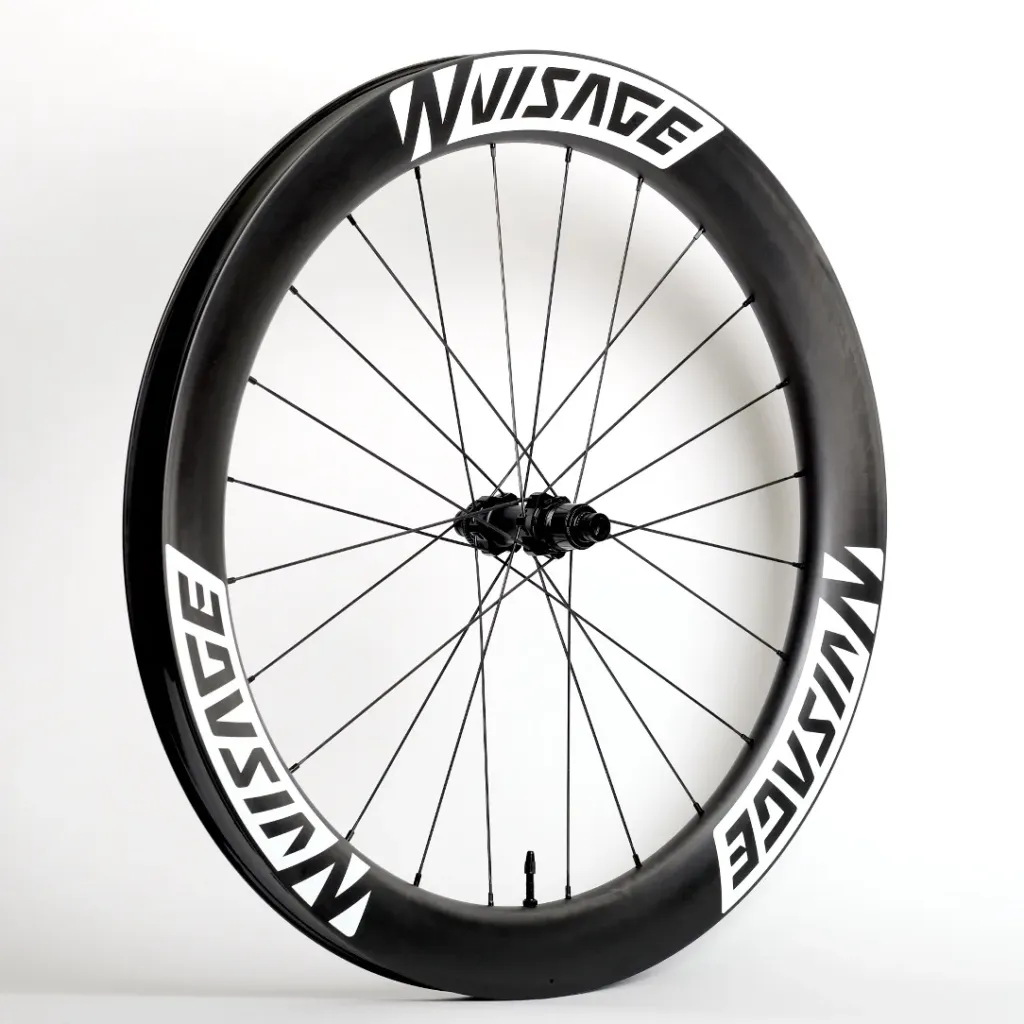
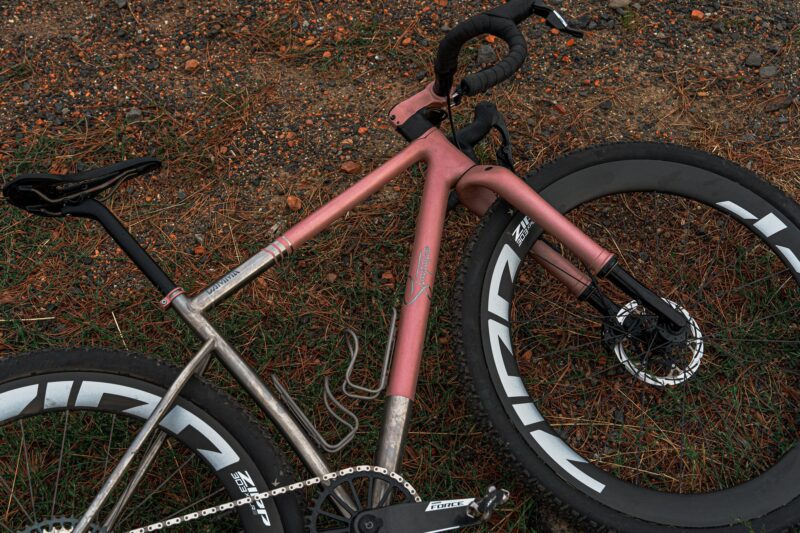
For gravel tires of 45 mm and wider, rims of 30 mm internal width and more are now common. Our Nvisage G60 has a 38 mm internal width and a 44 mm external width, wider than most current gravel rims, and is designed for 45 to 57 mm tires.
Rim depth
Deeper rims are more aerodynamic at speed but weigh a little more and can be pushed around by crosswinds. For gravel, the benefit of depth depends on the tire. A deep rim only works well aerodynamically when it is wide enough for the tire in front of it. When the tire is much wider than the rim, the air separates off the tire before it reaches the rim, and the depth adds weight without much benefit. Our guide to aero gravel setups explains this in more detail.
Depths of 40 to 50 mm are a good all-round choice. Depths of 55 to 65 mm suit fast riding on open roads, provided the rim is wide enough for your tires.
Hooked vs hookless rims
Hooked rims have a small lip that holds the tire bead. Hookless rims have straight walls and rely on the tubeless tire’s bead to stay seated. Hookless rims can be made wider and stronger at the same weight, but they have lower pressure limits and should only be used with tires the tire maker approves for hookless rims.
Our AR45 and AR65 are hooked. The G60 is hookless. With any hookless wheel, check that your tire is approved for hookless use and follow the tire maker’s pressure recommendations. Our tire pressure guide covers how to find them.
What else to check: hubs, spokes and weight limits
Look for sealed bearings, a hub with a quick engagement, the freehub body your drivetrain needs, and a spoke count that suits your weight and riding. Check the maximum system weight too, which covers you, the bike and your luggage.
Weight matters less than it seems on gravel. A rim that is well matched to your tires usually does more for speed and comfort on real terrain than saving a few grams with a rim that is too narrow.
Nvisage AR45, AR65 and G60 compared
| Wheelset | Depth | Internal / external width | Rim | Tires |
|---|---|---|---|---|
| AR45 | 45 mm | 29 / 37 mm | Hooked | 32 to 40 mm road, 40 to 52 mm gravel |
| AR65 | 60 mm front, 65 mm rear | 32 / 40 mm | Hooked | 35 to 40 mm road, 42 to 57 mm gravel |
| G60 | 60 mm | 38 / 44 mm | Hookless | 45 to 57 mm gravel |
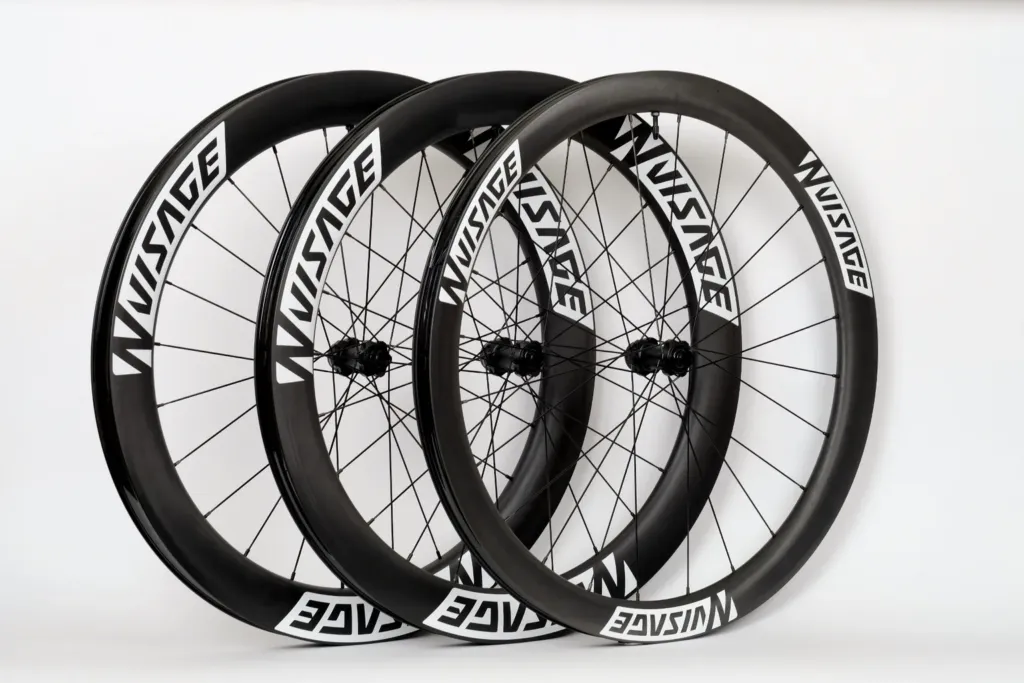
All three use straight-pull Sapim CX-Ray spokes and come with XDR, HG or Micro Spline freehubs, and the price includes shipping to the countries we sell to online. You can buy them on their own for your current bike, or compare them on our wheels page. All three fit all three of our frames, and complete builds come on the AR65 for the N1 and the G60 for the Gamma Race and Gamma X. For road tires, our guide to endurance road bikes and wider tires covers the AR45 and AR65. On our Gamma Race and Gamma X, the G60 pairs with tires from 45 mm up to 2.2 in. Our tire clearance guide explains how to check that a tire fits your frame.