A road bike is built for speed on pavement. A gravel bike trades some of that speed for tire room, stability and lower gears, so it can handle dirt, broken roads and loaded riding. The line between the two has blurred as road tires have grown wider. Many riders now run 35, 38 or even 40 mm tires on the road, a width that a few years ago only fit on a gravel bike.
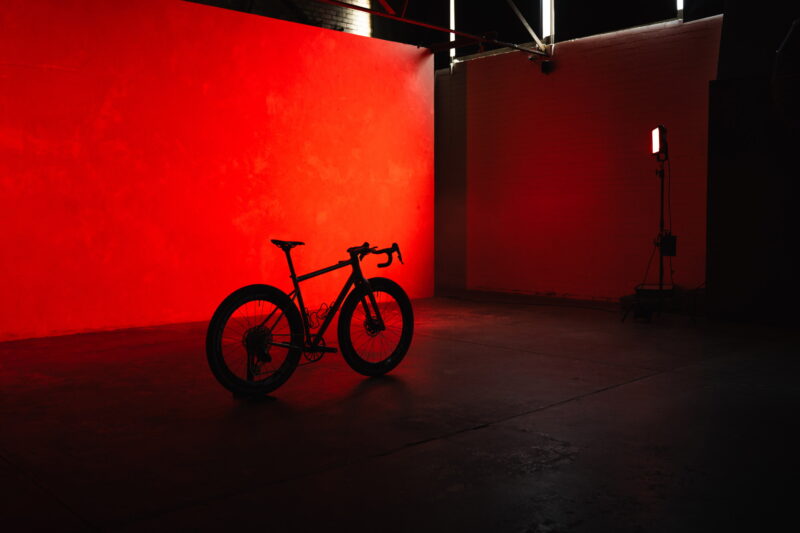
This guide covers how the two types differ, where they now overlap, and how to choose. It also explains where our N1 fits: an all-road gravel bike that is fast on wide road tires and a real gravel bike on hardpack.
Gravel bike vs road bike: the main differences
Most of the differences come down to tire width, geometry and gearing. Between the classic road race bike and the gravel bike sits a newer kind of road bike, built around wide road tires with room for gravel tires when you need them. Some brands call it an all-road bike, others an endurance road bike.
| Road race bike | Modern road bike | Gravel bike | |
|---|---|---|---|
| Typical tires | 25 to 32 mm | 32 to 40 mm road, gravel tires when needed | 40 to 55 mm or more |
| Handling | Quick and direct | Road-like, calmer at speed | Steady on loose surfaces |
| Position | Low and stretched out | Road position with a slightly taller front end | Taller and more upright |
| Gearing | Close ratios, high top end | Road double or wide-range 1x | Wide range with low climbing gears |
| Best surface | Smooth pavement | Pavement, rough roads and light gravel | Gravel, dirt, rough and loaded riding |
Road bikes now run wider tires
Road tires have been getting wider for more than a decade. The 23 mm tire that was once standard gave way to 25 mm, then 28 mm. Today 32 mm is a common choice on endurance road bikes, and more riders are moving to 35 to 40 mm.
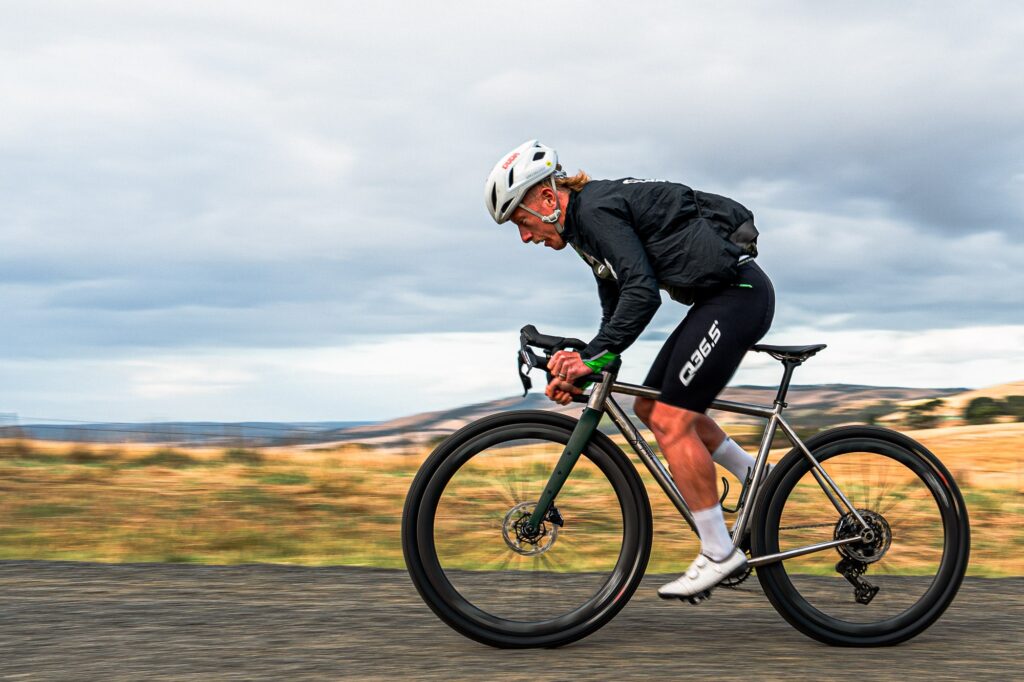
The reason is the road surface. A wider tire holds more air, so it can run at a lower pressure for the same load. At the right pressure it soaks up chip seal, cracks and broken edges, and less of your energy goes into bouncing the bike up and down. On rough roads that can make a wide tire faster than a narrow one pumped hard. The right pressure depends on the tire, so follow the tire maker’s guidance. Our tire pressure guide explains what affects it.
Wide road tires also move a road bike toward gravel territory. A frame that takes a 40 mm road tire has room for many gravel tires as well, and that’s where the two categories now meet. Our bike tire size guide shows which widths suit which riding.
Wide road tires need wide rims
A wide tire rides and rolls best on a rim wide enough to support it. On a narrow rim made for 25 mm tires, a 38 mm tire bulges into a light-bulb shape. The sidewalls fold more in corners, and air coming off the widest part of the tire separates before it reaches the rim.
A wider rim gives the tire straighter sidewalls and a smaller step between tire and rim. The smaller that step, the better the chance that air flows from the tire onto the rim and stays attached. That’s when a deep rim starts to help at speed. Our guide to aero gravel setups explains this in more detail, and the same logic applies on the road.
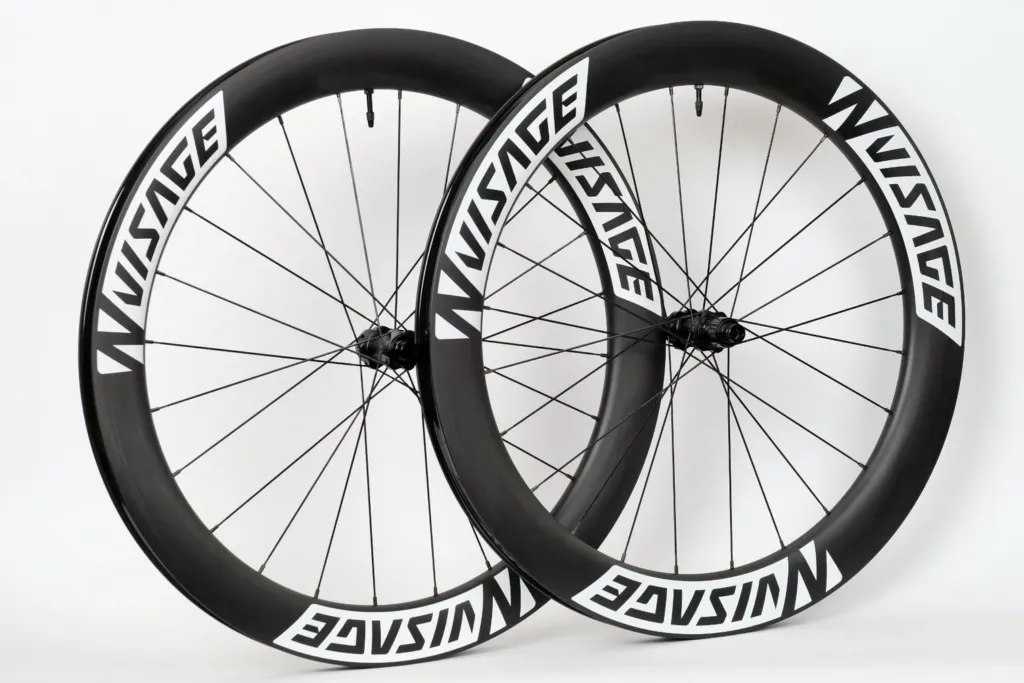
Our Nvisage road wheels are wider than a traditional road rim for this reason. The AR45 is 45 mm deep, with a 29 mm internal and 37 mm external width, and suits 32 to 40 mm road tires. The AR65 is 60 mm deep at the front and 65 mm at the rear, with a 32 mm internal and 40 mm external width, and suits 35 to 40 mm road tires. Both are hooked rims. With a 35 to 40 mm road tire, the outside of the rim sits close to the width of the tire, so the rim depth can do its job.
Geometry: stability vs quick handling
Gravel bikes usually have a longer wheelbase, a taller front end and a lower bottom bracket than road bikes. The longer wheelbase and lower center of gravity make the bike steadier when the front wheel skips over loose stones. The taller front end makes it easier to stay relaxed and look ahead on rough ground.
You can see this in our own bikes. In a size 56, our N1 has 580 mm of stack, 398 mm of reach, 78 mm of bottom bracket drop and a 1,038 mm wheelbase. Our Gamma Race gravel bike in the same size has 599 mm of stack, 407 mm of reach, 84 mm of bottom bracket drop and a 1,050 mm wheelbase. The Gamma Race is taller and longer and sits lower between the wheels, which keeps it calm on fast gravel. The N1 is lower and shorter, so it feels like a road bike on pavement. Our gravel bike geometry guide explains each of these numbers, and the gravel bike sizing guide shows how to pick a size.
Gearing for climbs and loaded riding
Road bikes use closely spaced gears with a high top gear for fast group riding. Gravel bikes need lower gears for steep, loose climbs and for carrying bags, so they often use a single chainring with a wide-range cassette, or a small double. You give up some top-end speed and get gears you can keep turning on a steep dirt climb.
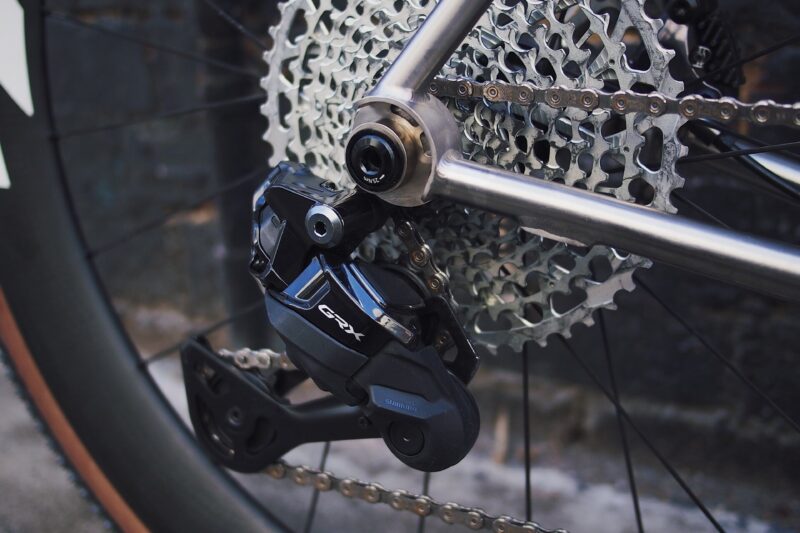
A modern road bike can go either way. The N1 takes a road double or a 1x drivetrain, and the choice also sets its gravel tire clearance: 45 mm with 2x and 48 mm with 1x. Road tires rarely go past 40 mm, so either drivetrain clears them with room to spare.
Can you use a gravel bike on the road?
Yes. A gravel bike works on the road, and plenty of riders use one as their only bike. On smooth pavement it feels slower than a road bike, mostly because of its wider, knobbier tires and more upright position. Fitting road tires closes a good share of that gap. What stays is the longer, steadier handling, and on a 1x setup the wider jumps between gears, which you notice most on fast group rides.
If most of your riding is on pavement, a road bike with room for wide tires is usually the better place to start. It feels like a road bike on the road and still takes you onto gravel when the route turns to dirt.
The N1: one titanium bike for wide-tire road and hardpack gravel
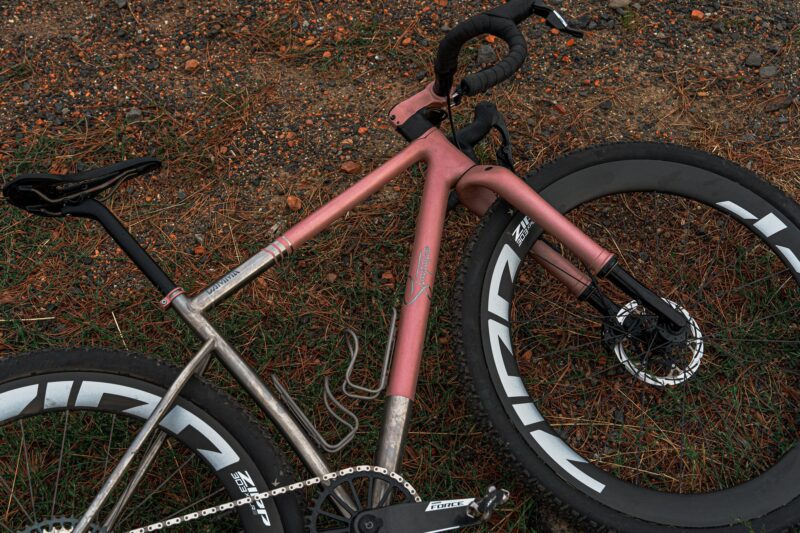
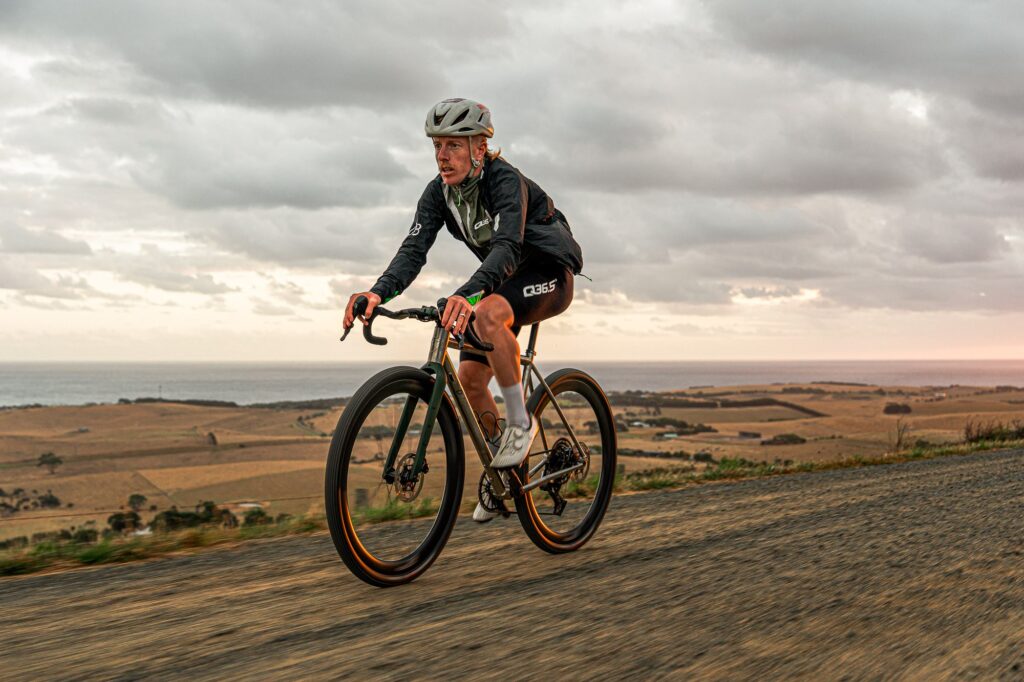
Our N1 is a titanium all-road bike with endurance road geometry, and its road and gravel setups are equals. It runs road tires from 28 mm, and takes gravel tires up to 45 mm with a 2x drivetrain or 48 mm with 1x.
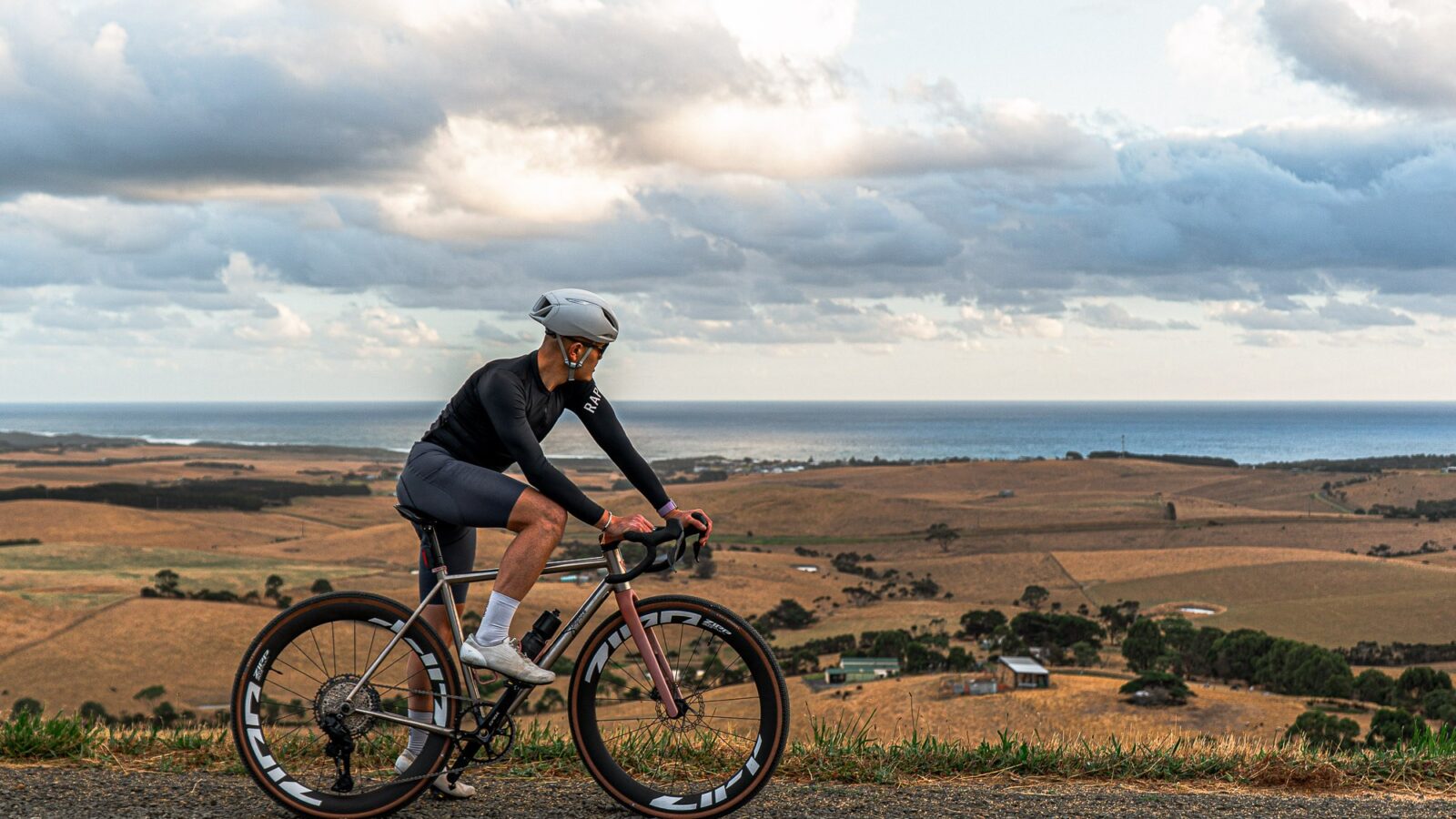
For road riding, we recommend pairing it with our Nvisage road wheels and a 35, 38 or 40 mm road tire. You get the comfort and grip of a wide tire, on a rim wide and deep enough to keep the bike quick at speed. Complete N1 builds come on AR65 wheels as standard, and you can switch to the AR45 when you configure yours. When you want to ride gravel, fit gravel tires, or keep a second wheelset set up for the dirt.
In its gravel setup, the N1 is a gravel bike in its own right. If your local gravel is hardpack or smooth dirt, or you don’t feel the need for tires wider than 48 mm, it covers gravel riding on its own. You don’t have to give up road gearing for it: a 2x drivetrain still takes 45 mm gravel tires, and 1x takes 48 mm.
| Setup | Tires | Suits |
|---|---|---|
| N1 + AR65 | 35 to 40 mm road | Fast solo and group rides on flat and rolling roads |
| N1 + AR45 | 32 to 40 mm road | All-round road riding, including hilly and windy routes |
| N1 + AR45 | 40 to 48 mm gravel | Hardpack gravel, road rides with gravel sections, and light touring |
Our guide to endurance road bikes and wider tires goes deeper on the road setup. The titanium road bike frame guide explains why titanium suits a bike you plan to keep for years.
Gravel or road bike: which should you buy?
| Your riding | Best fit | Our setup |
|---|---|---|
| Mostly pavement, fast group rides and rough country roads | Modern road bike | N1 with AR45 or AR65 wheels and 35 to 40 mm road tires |
| Mostly pavement, with gravel roads along the way | All-road bike | N1 with 40 to 45 mm gravel tires, or a second wheelset |
| Hardpack or smooth gravel, on tires up to 48 mm | Gravel bike | N1 with 45 mm gravel tires (2x) or 48 mm (1x) |
| Loose or rough gravel, gravel racing, or tires wider than 48 mm | Gravel bike with big-tire clearance | Gamma Race with G60 wheels |
| Rough, technical gravel, bikepacking or long days on corrugated roads | Gravel bike with suspension | Gamma X |
If one bike has to do everything, choose it for the riding you do most, then change tires or wheels for the rest. Once you’ve settled on the type, our guide to choosing a titanium gravel bike covers what to check before you buy, and you can compare our wheelsets side by side.
Gravel bike vs road bike FAQ
Can I use a gravel bike as a road bike?
Yes. Fit road tires and it makes a comfortable road bike. It will still steer more slowly than a road bike, and a 1x drivetrain has wider gaps between gears.
What are the downsides of a gravel bike?
On pavement, a gravel bike is usually heavier and slower than a road bike, mainly because of its tires, position and gearing. The long wheelbase that keeps it calm on loose ground also makes it slower to change direction on the road.
Can you put 40 mm tires on a road bike?
Only if the frame and fork have room. Many road race bikes top out around 32 mm, while newer endurance and all-road bikes take 40 mm or more. The N1 takes a 40 mm road tire with room to spare. A wide rim makes a tire measure wider than its label, so check the fit on the rim you’ll use. Our tire clearance guide explains how much room to leave.
Do I need a gravel bike or a road bike?
Go by where you ride most. If it’s mostly pavement with some gravel, a road bike with room for wide tires is the better fit. If gravel and dirt make up a large share of your riding, or you carry bags, choose a gravel bike.