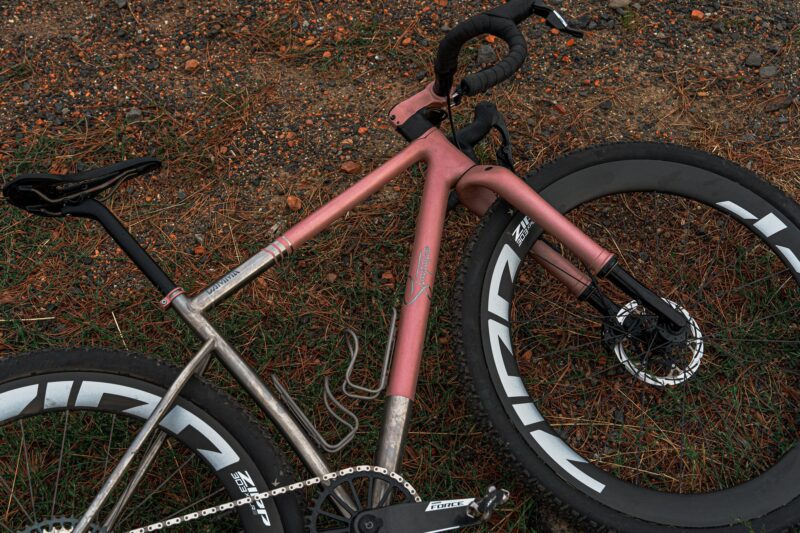
Most people keep a titanium gravel bike for many years, so the choices that matter are the ones you can’t change later. Bar tape, tires, and even wheels are easy to swap. The frame’s tire clearance, its geometry, the fork it was designed around, and the standards it uses stay with you for as long as you own it.
This guide goes through what to check, in the order we would check it. We make three titanium gravel and all-road bikes and use them as worked examples, but the checks apply to any brand.
What kind of titanium gravel bike do you need?
Write down your most common ride: the surface, the distance, how much climbing, and whether you carry bags. Then write down the hardest ride you do more than a few times a year. The bike has to cope with both, but it should be set up for the first one.

Gravel bikes tend to fall into three groups:
- Fast gravel and racing, where an efficient position and plenty of tire room matter most. Our aero gravel setup guide covers the wheels and tires that go with it.
- Rough, technical or loaded riding, where more tire volume, a longer wheelbase and sometimes a suspension fork help.
- All-road riding that mixes pavement with lighter gravel, usually on 35 to 48 mm tires. See our guide to endurance road bikes and wider tires.
Our Gamma Race is built for the first group, the Gamma X for the second, and the N1 for the third. The N1 can also be your only gravel bike if your gravel is mostly hardpack and you don’t need tires over 45 mm with 2x or 48 mm with 1x. Complete builds come on Nvisage carbon wheels matched to each bike: the G60 on the Gamma Race and Gamma X, and the AR65 on the N1. If you are still deciding between a gravel bike and a more road-focused option, our guide to gravel bikes vs. road bikes covers the differences.
Titanium grade: Grade 9 vs Grade 5
Most titanium bike tubing is Grade 9 (Ti-3Al-2.5V). It draws well into seamless tubes, which is why it is the usual choice for main tubes. Grade 5 (Ti-6Al-4V) is stronger but harder to form into tubing, so it tends to be used in machined or printed parts, such as dropouts. “Aerospace titanium” on a spec sheet doesn’t tell you which grade is used where, so ask.
Our frames use Grade 9 Ti-3Al-2.5V tubing. The head tube of our Gamma frame is 3D printed, the bottom bracket shell is cast and the chainstay yoke is made by metal injection molding. Those methods let the junctions take shapes that plain tube-to-tube construction can’t.
If you haven’t settled on titanium yet, read titanium vs carbon gravel bikes first. It includes test data on how much the frame material changes ride comfort.
Who makes the frame and how it’s welded
Titanium is welded inside a shield of inert gas, and clean, consistent welds are the best visible sign of a careful maker. Many good titanium frames come from specialist factories. What matters is that the brand designs the frame, sets the specifications, and inspects every frame before it’s built into a bike.
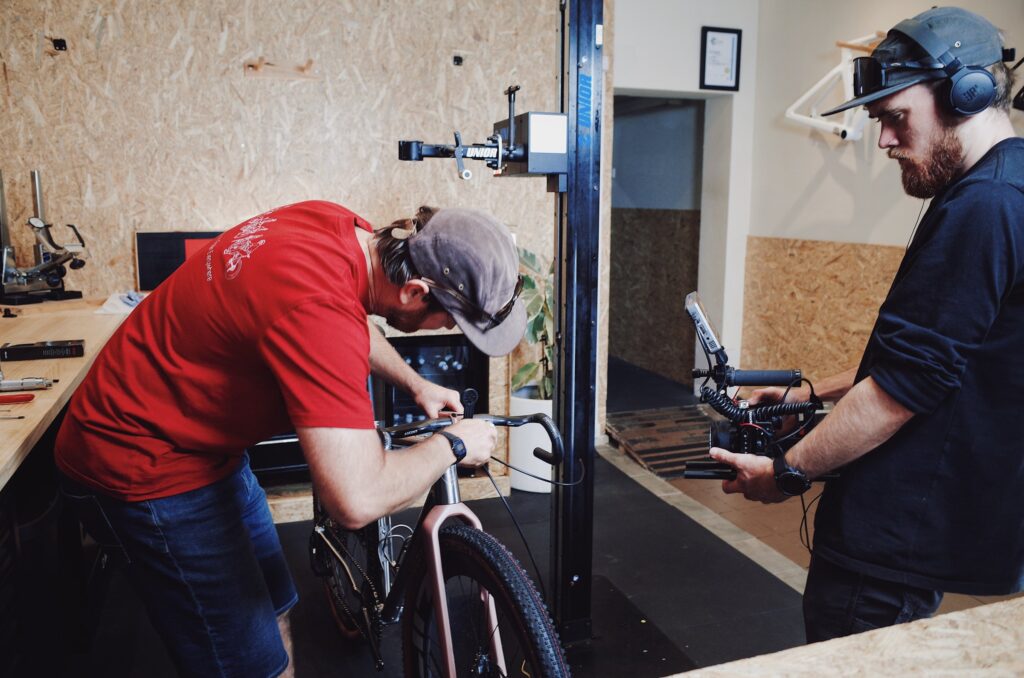
We design our frames in Melbourne. A specialist titanium fabrication partner in China hand-welds them, and we inspect, assemble, and set up every bike in our Melbourne workshop. If you’re nearby, you can book a workshop visit and look at the welds on a bare frame yourself. If you’re further away, get in touch with any questions about how our frames are made.
Tire clearance: the number you can’t change later
Tire clearance determines what a gravel bike can ride on, and you can’t upgrade it later. Ask for the largest tire the frame and fork take with room left for mud. Check whether the front and rear limits differ, and whether the figure changes with the drivetrain. Some frames lose rear clearance with a double chainring.
| Model | Largest front tire | Largest rear tire | Fork |
|---|---|---|---|
| Gamma Race | 60 mm | 2.2 in (about 56 mm) in dry conditions | Rigid |
| Gamma X | 50 mm | 2.2 in (about 56 mm) in dry conditions | Cane Creek Invert, 30 mm or 40 mm travel |
| N1 | 45 mm with a 2x drivetrain, 48 mm with 1x | Rigid | |
In mud, run a slightly narrower rear tire to leave more room. How much depends on your local soil and weather.
Our gravel tire clearance guide explains how rim width and mud change these numbers once the bike is built.
Geometry and fit
Compare stack and reach with a bike you already ride well. Stack sets how high the front of the bike is. Reach sets how far forward the bars sit. If the new bike is close to your current one on both, a stem or spacer change can make up a small difference.
Then look at wheelbase and bottom bracket drop, which shape how calm the bike feels on loose ground. In a size 56, the Gamma Race has 599 mm of stack, 407 mm of reach and a 1,050 mm wheelbase. The N1 in the same size has 580 mm of stack, 398 mm of reach and a 1,038 mm wheelbase. The N1 puts you lower and a little more compact, which suits long road-heavy days. The Gamma Race is taller and longer, which keeps it steady on fast gravel.
Our gravel bike geometry guide explains each number, and the gravel bike sizing guide shows how to pick a size. All of our geometry is on the size chart.
Rigid or suspension fork
Most gravel bikes use a rigid fork, which is light and simple. A short-travel suspension fork takes the sting out of corrugations and rocky descents and helps the front tire keep grip on loose surfaces. It costs some weight and needs occasional servicing.
If you might want suspension later, check that the frame’s geometry is corrected for a suspension fork. A suspension fork sits taller than a rigid one, and fitting one to a frame that wasn’t designed for it raises the front end and slackens the steering. The Gamma X is built around the Cane Creek Invert fork. The Gamma Race’s geometry is corrected for a 30 mm suspension fork, so fitting one later keeps its handling close to the rigid setup.
Frame standards: T47, UDH and seatpost
A titanium frame can outlast several groupsets, so it helps if replacement parts stay easy to find. These are the standards worth asking about:
- A threaded bottom bracket. We use T47, with a 73 mm shell on the Gamma frames and 85.5 mm on the N1.
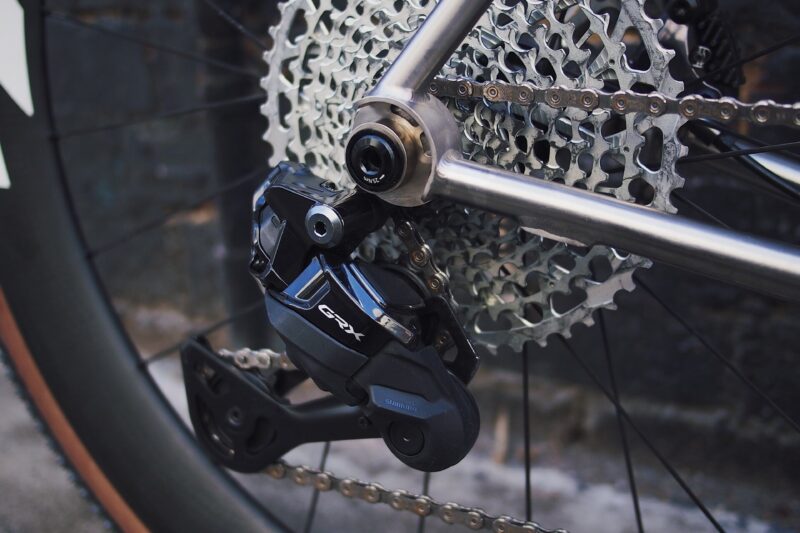
- A UDH derailleur hanger, which makes replacements easy to find and allows SRAM’s full-mount Transmission derailleurs.
- A standard round seatpost, so you can fit a suspension or dropper post if you want one.
- A headset standard that takes common parts. Ours are ACR-compatible.
Raw titanium or Cerakote
Titanium doesn’t need paint to resist corrosion, so many riders leave it bare. A brushed finish hides light scuffs and needs nothing more than washing. If you want color, a thin ceramic coating such as Cerakote holds up better than conventional paint. Our Cerakote page shows the colors we offer and how the finish is applied.
Price, delivery and warranty
When you compare complete bikes, compare them like-for-like: groupset, wheels, tires, cockpit, and whether shipping is charged separately. Our configurator prices include shipping to Australia, the US, Canada, the UK, Japan, and most of Western Europe. Plan on about six weeks from order confirmation to delivery. Our frames carry a 10-year warranty against manufacturing defects.
If you already have a groupset and wheels you like, buying the frame on its own may make more sense. Our guide to frame chassis, complete build or configurator covers when each route works.
Titanium gravel bike FAQ
Is titanium good for a gravel bike?
Yes, for most gravel riding. Titanium tolerates stone chips and scuffs, needs no paint to resist corrosion, and rides comfortably when it’s paired with the right tires. Carbon is usually lighter, and aluminum costs less. Titanium suits riders who want a durable frame they will keep for many years.
Are titanium gravel bikes worth it?
They are if you plan to keep the bike for a long time. A titanium gravel bike costs more than most aluminum and mid-range carbon bikes, but the frame doesn’t need refinishing, shrugs off surface damage, and can take several generations of parts when it uses common standards such as a threaded bottom bracket and a UDH hanger.
What are the downsides of a titanium frame?
Price, weight and simpler tube shapes. Titanium frames usually cost more and weigh a little more than comparable carbon frames, and there is less room for aero shaping. Hand-welded frames can also take longer to build. Plan on about six weeks from order confirmation to delivery for most of our builds.
Is titanium or carbon better for gravel?
Carbon is lighter and easier to shape. Titanium copes better with knocks and needs no paint. On comfort, the two are closer than their reputations suggest, because tires, pressure and the fork matter more. Our guide to titanium vs carbon gravel bikes compares them in detail.
How long does a titanium bike frame last?
A well-made titanium frame can last for many years of regular riding. Bare titanium doesn’t rust, and surface scratches don’t weaken it. Our frames carry a 10-year warranty against manufacturing defects.
What size gravel bike do I need if I’m 5’10”?
At 5’10” (178 cm), most riders fit our size 54, which covers 172 to 180 cm. Height is only a starting point, so compare stack and reach with a bike you already ride. Our gravel bike sizing guide shows how, and the size chart has every number.
Questions about ordering, payment, delivery or warranty are answered in our titanium bike FAQ.
Once you’ve narrowed it down, compare our titanium gravel bikes side by side, or send us your current bike’s measurements and we’ll suggest a model and size.